%22%2F%3E%3Cstop%20offset%3D%221%22%20stop-color%3D%22hsl(151%2C%2060%25%2C%2040%25)%22%2F%3E%3C%2FlinearGradient%3E%3C%2Fdefs%3E%3Crect%20width%3D%221200%22%20height%3D%22630%22%20fill%3D%22url(%23bg)%22%2F%3E%3Ctext%20x%3D%2290%22%20y%3D%22120%22%20font-family%3D%22'Courier%20New'%2C%20ui-monospace%2C%20monospace%22%20font-size%3D%2234%22%20fill%3D%22rgba(255%2C255%2C255%2C0.55)%22%3E%26lt%3B%2F%26gt%3B%20writeups%3C%2Ftext%3E%3Ctext%20x%3D%2290%22%20y%3D%22276%22%20font-family%3D%22'Courier%20New'%2C%20ui-monospace%2C%20monospace%22%20font-size%3D%2260%22%20font-weight%3D%22700%22%20fill%3D%22%23ffffff%22%3E2026%20Django%20Developer%3C%2Ftext%3E%3Ctext%20x%3D%2290%22%20y%3D%22354%22%20font-family%3D%22'Courier%20New'%2C%20ui-monospace%2C%20monospace%22%20font-size%3D%2260%22%20font-weight%3D%22700%22%20fill%3D%22%23ffffff%22%3ESurvey%20Results%2C%20MY%20POV%3C%2Ftext%3E%3Ctext%20x%3D%2290%22%20y%3D%22560%22%20font-family%3D%22'Courier%20New'%2C%20ui-monospace%2C%20monospace%22%20font-size%3D%2230%22%20fill%3D%22rgba(255%2C255%2C255%2C0.65)%22%3Echrisdevcode.com%3C%2Ftext%3E%3Crect%20x%3D%220%22%20y%3D%22618%22%20width%3D%221200%22%20height%3D%2212%22%20fill%3D%22%23e8bf2c%22%2F%3E%3C%2Fsvg%3E)
this survey drops every year and i mostly use it as an excuse to see what tools i should be looking at. did the same thing in 2025, doing it again now. so here's my pov on the 2026 Django developer survey, going question by question, mostly the ones i actually have opinions on.
https://www.djangoproject.com/weblog/2026/may/12/2026-django-developers-survey/
versions and upgrades
i'm on 6.x for anything new i'm starting, and slowly dragging my older projects up to speed. the survey shows 43% of respondents are already on 6.0 and 44% still on 5.x, which tracks. what doesn't sit right with me is the "older than 4.x" and "unsupported version" crowd. i get it, rewrites are expensive and nobody has time, but those developers have my undivided attention. every single time.
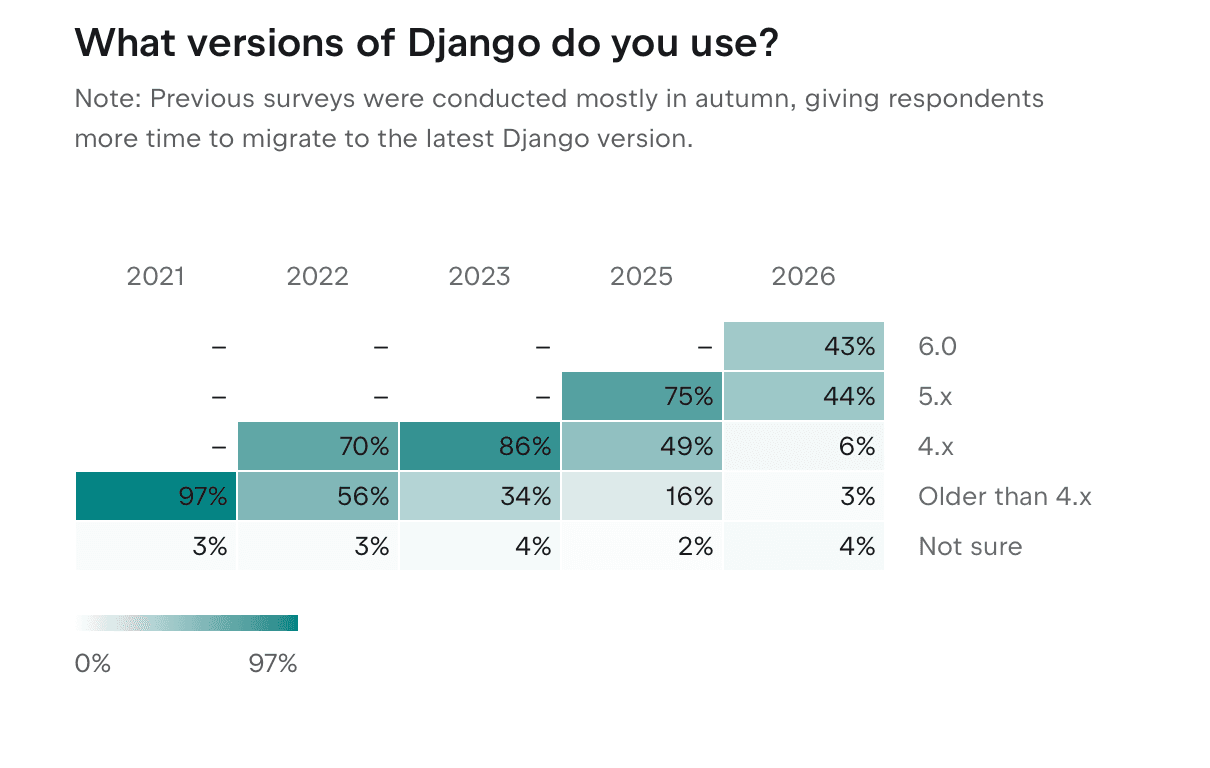
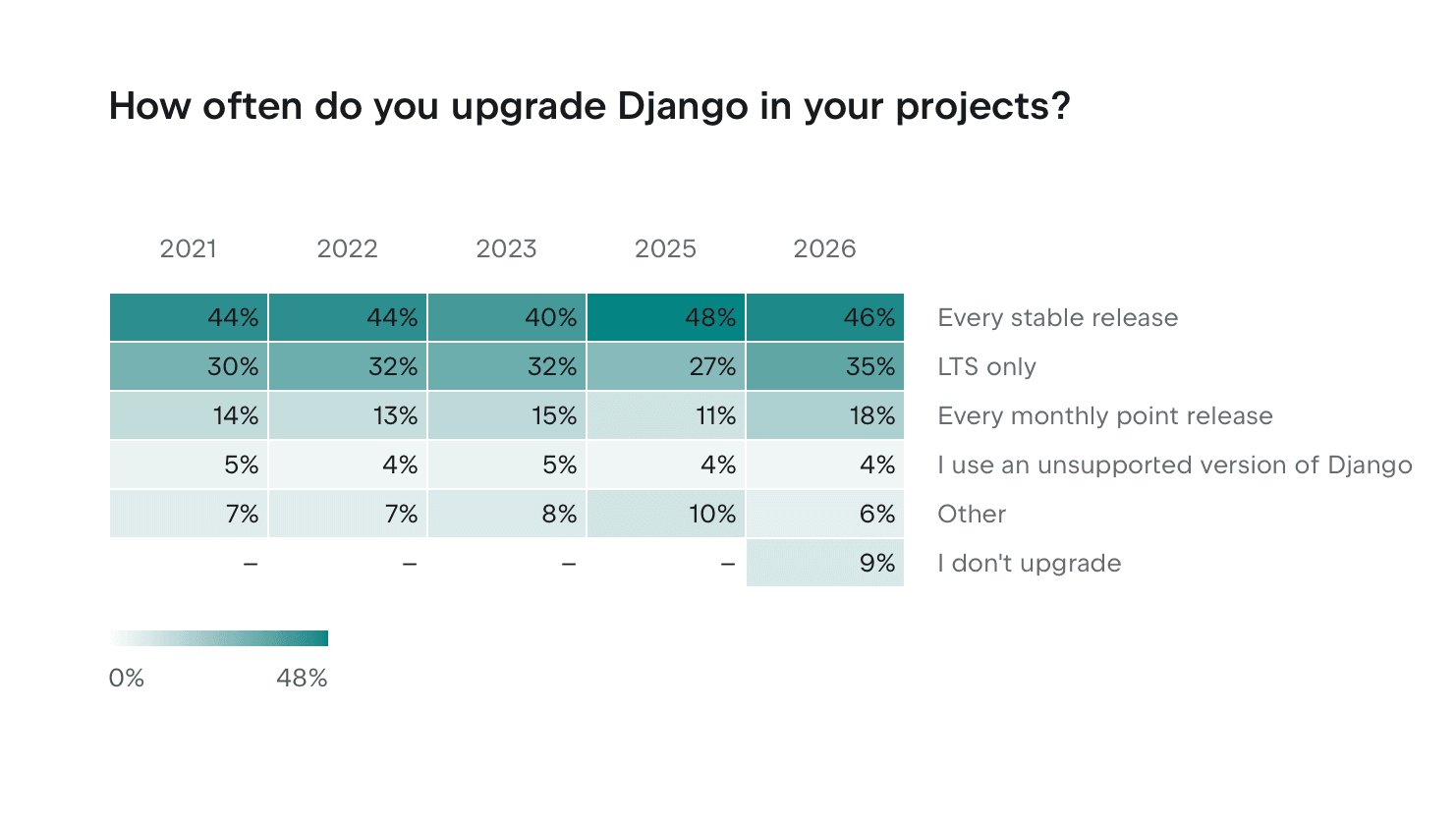
on how often people upgrade: 46% do it every stable release, 35% stick to LTS only, and 9% straight up said "i don't upgrade." that last one is new this year and honestly i respect the honesty more than i respect the choice.
database, the honest version
postgres is my go to, but only in production. i genuinely can't be bothered setting it up locally, so on my machine it's sqlite the whole way through, keeping things simple and lazy on purpose.
my django starter template is built around this exact workflow. i can test production settings locally too since everything runs on docker in prod, but i hate running all of that on my own machine, so i let github's CI/CD carry that weight instead.
the survey backs up the postgres obsession, 79% of respondents use it, sqlite sits at 46%, mysql at 26%.
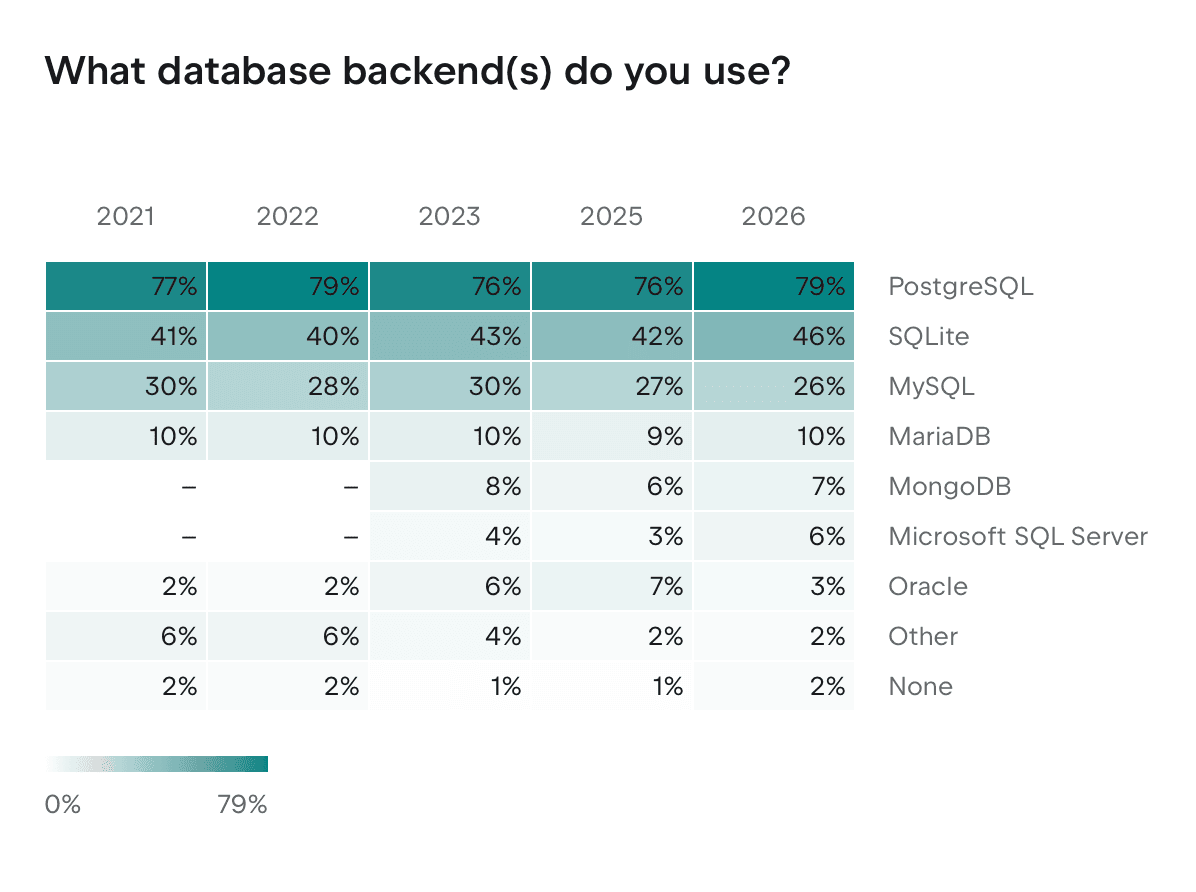
i've been messing around with mongodb on a couple of side projects too, nothing at paying gig level yet. if it were reverse compatible with postgres i'd probably run it as a secondary db on production apps without thinking twice. need to go check what's happening with the django mongodb library, it's been a minute since i looked.
templates vs APIs, the eternal question
if you ask me how i "really" use django and the honest answer is a mix. server rendered templates, pure APIs, and sometimes both in the same project depending on the use case. but if i had to pick a majority, it's templates.
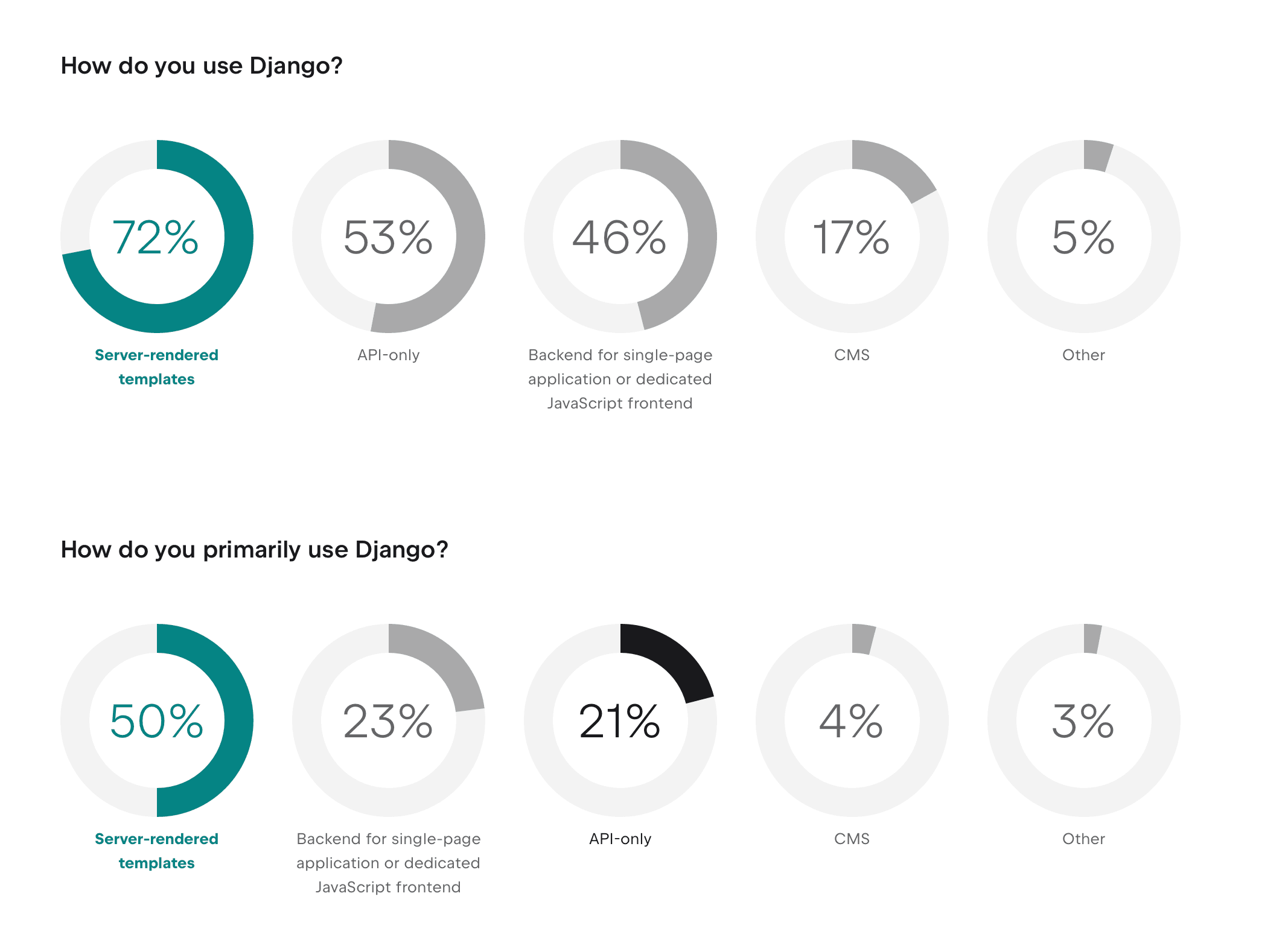
the survey numbers land close to where i'd guess, 72% use server rendered templates in some form, 53% use it API only, and when you ask what people primarily use it for, templates still take half the vote.
i love django and it's always my first instinct when starting something new, but i won't pretend it fits everything. for data heavy, fullstack, long running projects, it's my pick every time. for small static sites or a simple CMS for a blog or a newsletter, i reach for strapi or next.js instead. no shade to django there, just the right tool for the job.
on templates specifically, i've stuck with django templates the whole way and never really tried anything else. maybe that changes one day, but right now django templates has my heart. same story with APIs, django rest framework all the way. i've heard good things about django ninja and i just haven't bothered trying it, and honestly i don't think i will anytime soon.
css is where i get a little sentimental, i still love bootstrap. but every LLM template out there defaults to tailwind, so these days it's a question of necessity more than preference. i think i need to go find some bootstrap skills for my LLM setup at some point.
how i actually start a project
- every project starts from my own template, https://djangotemplate.chrisdevcode.com, which is an edit of sass pegasus blended with a few other open source templates plus whatever preferences i've picked up along the way. the repo lives at https://github.com/achingachris/django-starter if anyone wants to poke around.
code formatting and testing right now is whatever sass pegasus and the AI tools shipped with, but i want to reconfigure everything to ruff and black. on python environments, i'm still a venv loyalist, only two months into using uv so it hasn't fully replaced my habits yet. the survey shows i'm not alone on venv, 63% still use it, with uv climbing to 43%.
on the frontend side, next.js and react sit at the top for me, they blend together in my head at this point. mobile apps come next, then angular.
if i had to rank the parts of django i actually care about: models first, for obvious reasons. admin second, especially when i'm building an API only backend and just need somewhere to poke around the data. everything else is a distant third, lol.
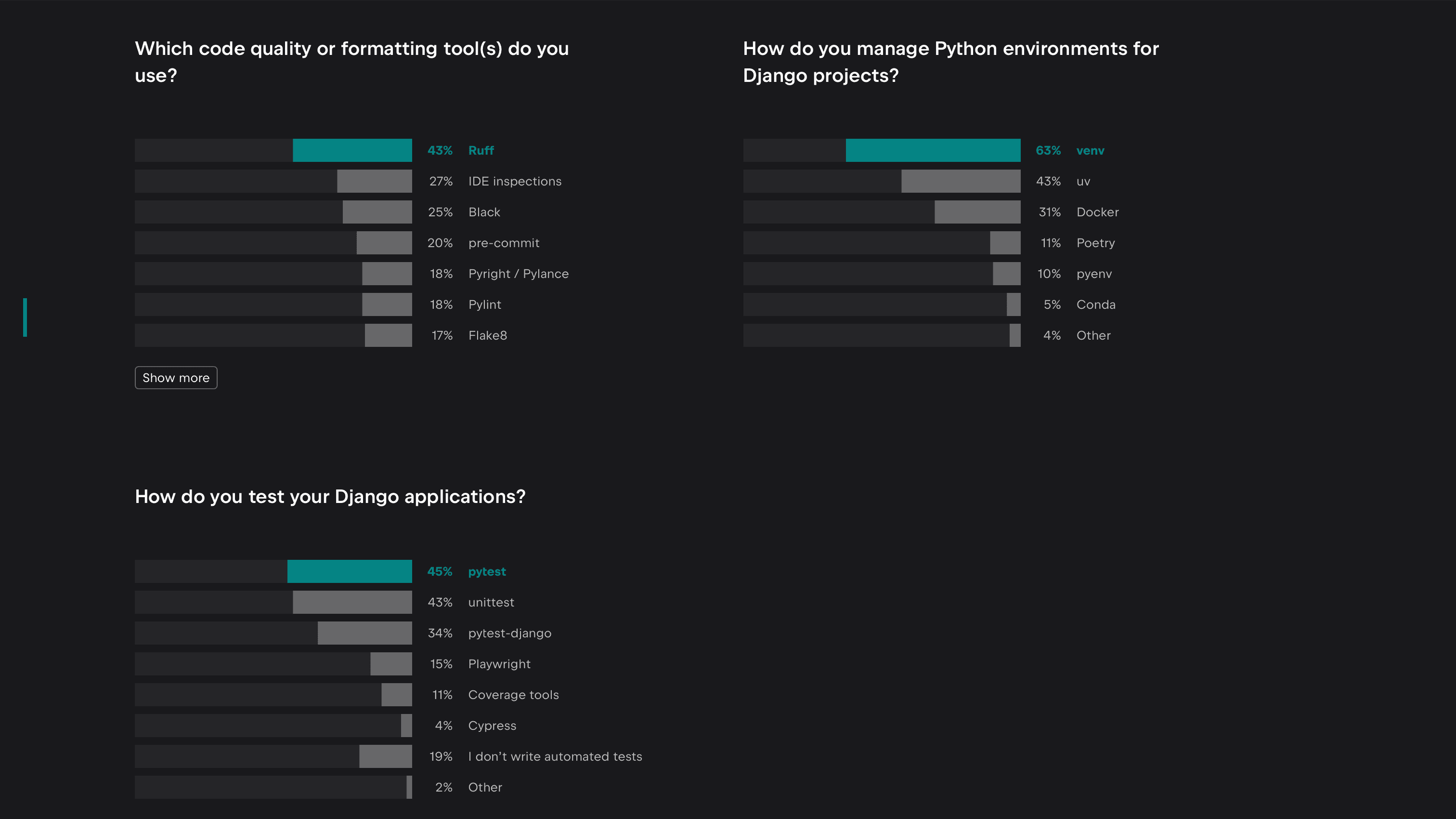
for caching, redis and valkey both make an appearance depending on the project.
deployment, self hosted all the way
everything i run is self hosted on one big vps, dockerized, running multiple projects and apps at once. on the newer deployments i've started running the database as a separate self managed service instead of sharing the same environment as the app, and honestly i'm thinking of migrating everything else over to that pattern too.
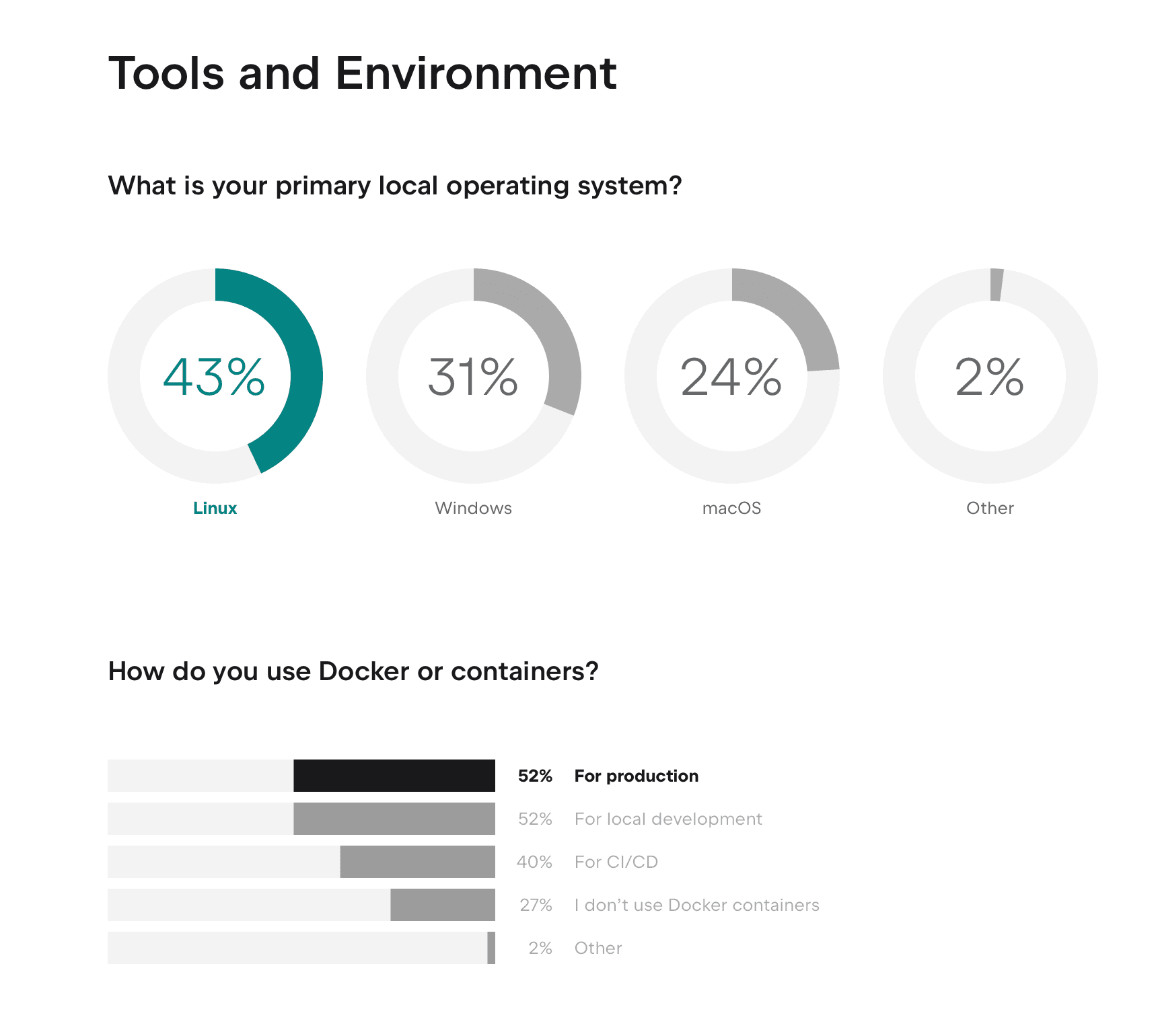
docker only shows up in production for me, local dev stays lightweight.
primary OS is macOS, currently running the beta because apparently i enjoy pain.
the ai tools and packages part
for coding and general dev work, my rotation is claude code, github copilot, codex, and cursor. favorite third party package has to be DRF, no contest.
i keep up with django and the ecosystem mostly through the django news bot and linkedin, nothing fancier than that.
the rest of it
currently unemployed, which is its own conversation. 5 or 6 years of professional coding experience, 4 of those specifically with django. i fall in the 21 to 29 age range, and i'm one of the 8% of respondents based in Africa, which is always a number i notice when these surveys come out.
that's it, that's my pov on this year's numbers. see you next survey(next year).
Comments